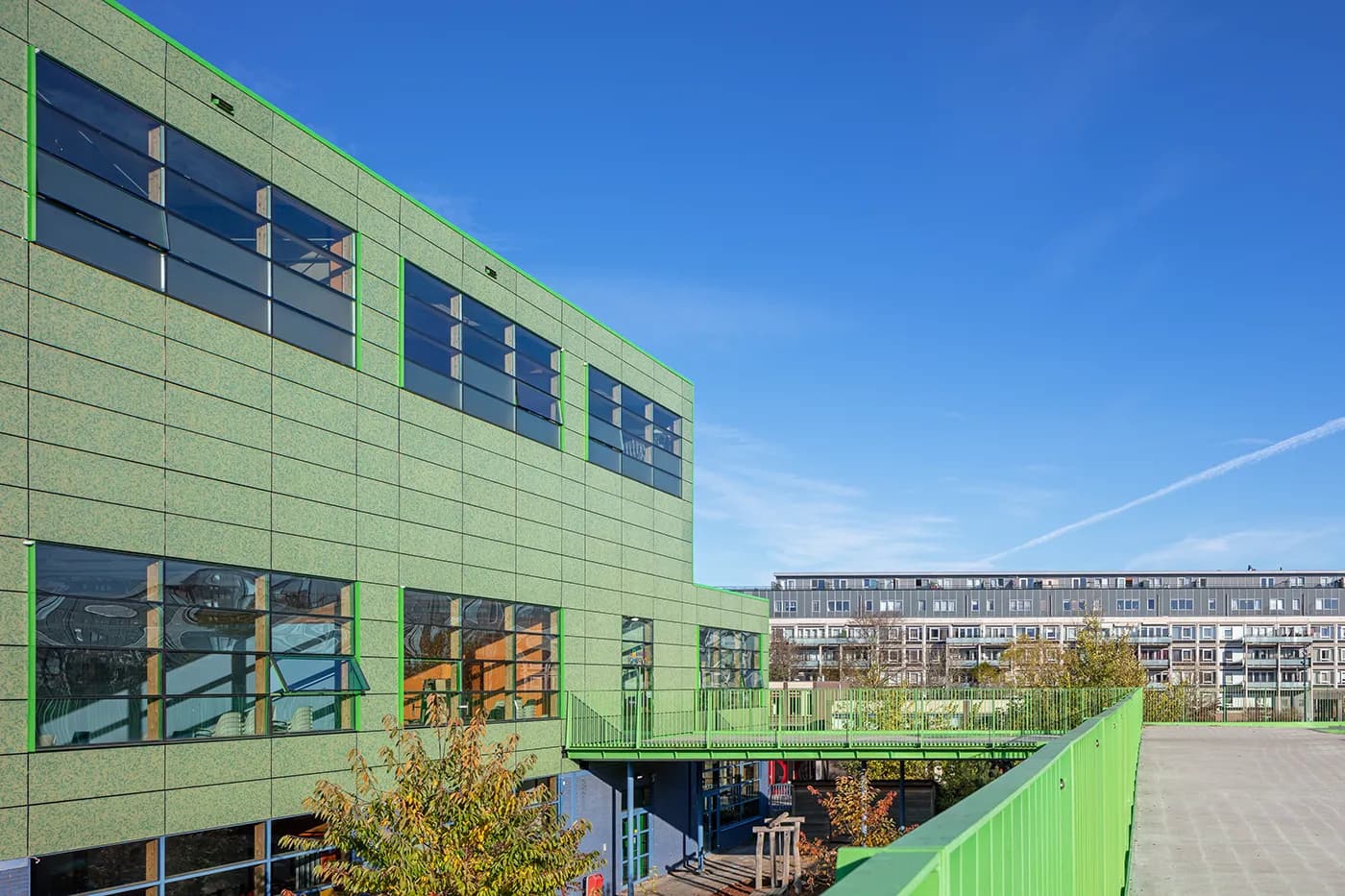
Building-integrated photovoltaics (BIPV) serve a dual purpose: they generate energy while also replacing part of the facade cladding. As such, they must meet the same fire safety requirements as other facade materials.
EN 13501-1: The standard for fire classification
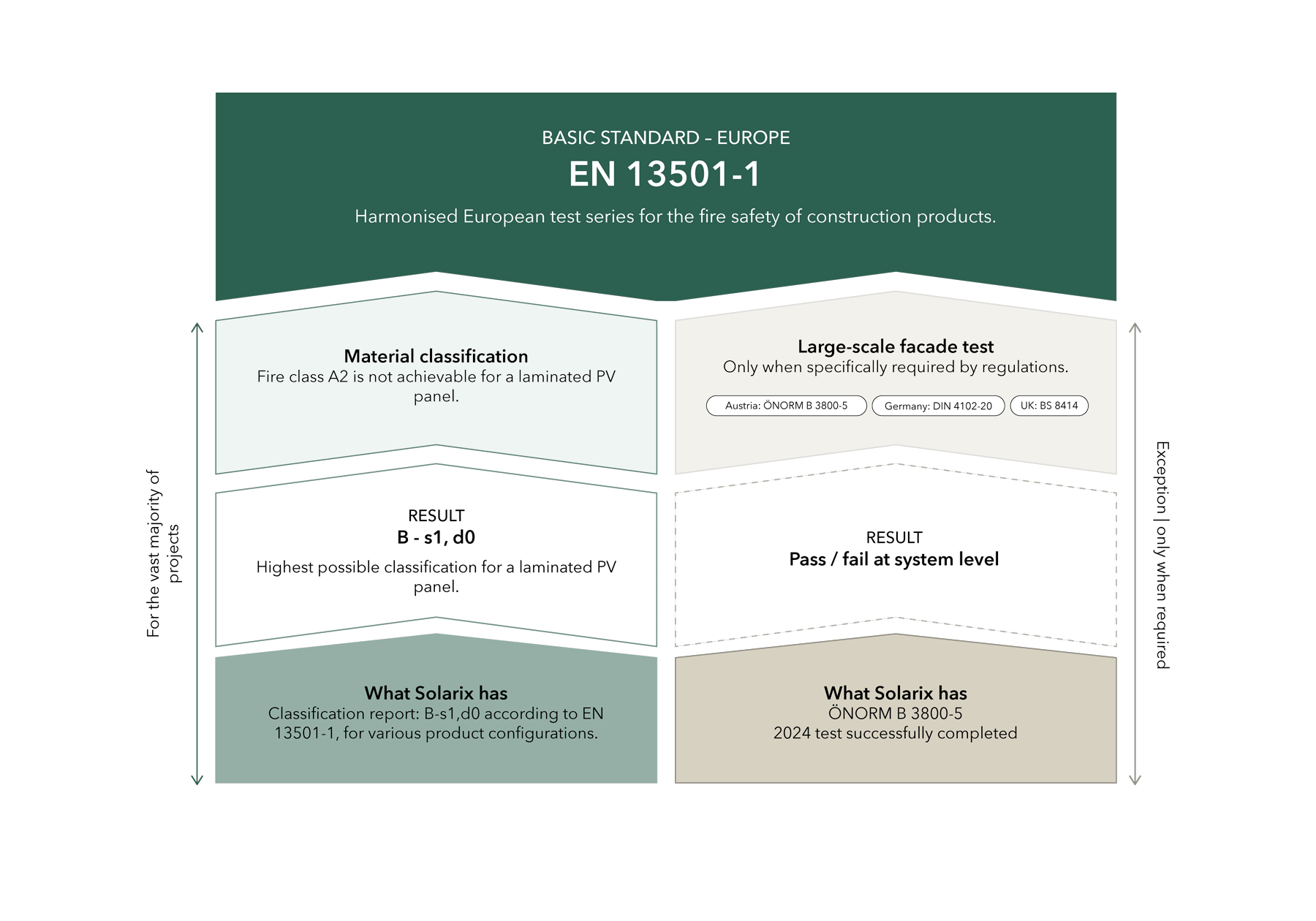
EN 13501-1 is the harmonised European testing standard used to determine the fire performance of construction products, including BIPV modules. Based on a combination of tests, products are assigned a Euroclass rating ranging from A1 (non-combustible) to F. For the vast majority of BIPV projects, this classification is the relevant and sufficient benchmark for demonstrating compliance with applicable fire safety requirements.
Explore the two approaches to assessing the fire safety of laminated PV panels below: material classification and large-scale facade testing.
Understanding the multilayer structure
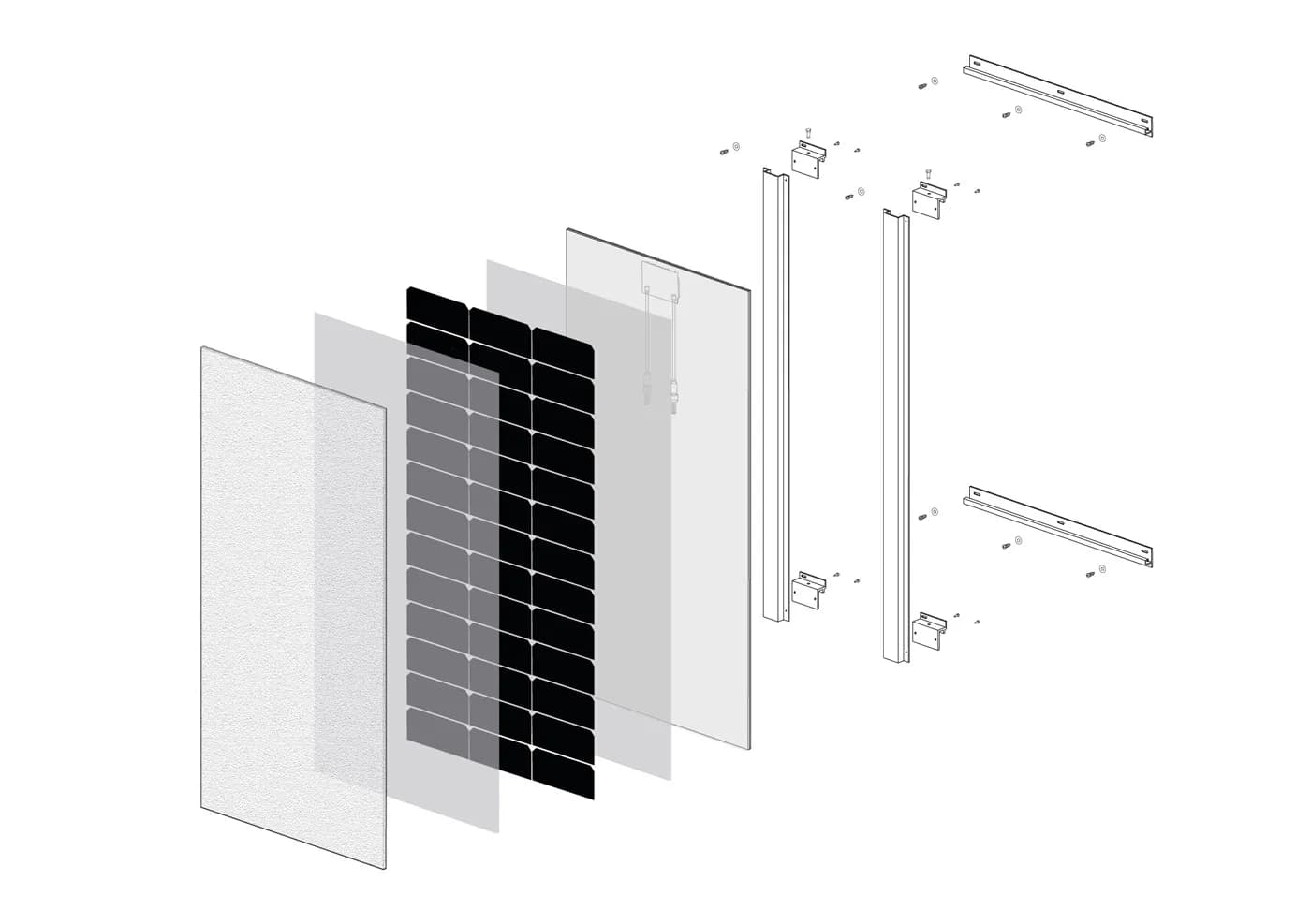
Conventional facade materials often consist primarily of a single material or have a relatively simple composition. On the other side, a BIPV module is a functional, multilayer electrical product. A typical glass-glass BIPV module consists of tempered front glass, polymer encapsulation layers (such as EVA, PVB, or other materials), photovoltaic cells and electrical connections, a rear glass layer, and additional components that form part of the module and facade mounting system.
Why A2 Is not achievable for laminated PV panels
The main challenge is the polymer encapsulant that seals the solar cells between the glass layers. This layer is essential for the panel to function. However, in the EN ISO 1716 test (heat of combustion, part of the A2 classification process under EN 13501-1), the encapsulant is assessed as a separate material, even though it is fully enclosed between two glass layers in the finished product.

Every laminated glass-glass PV panel with a polymer encapsulant faces the same physical limitation. B-s1,d0 is therefore not a compromise, but the highest achievable classification for this type of product. Solarix modules achieve this classification under EN 13501-1.
When is large-scale system testing relevant?
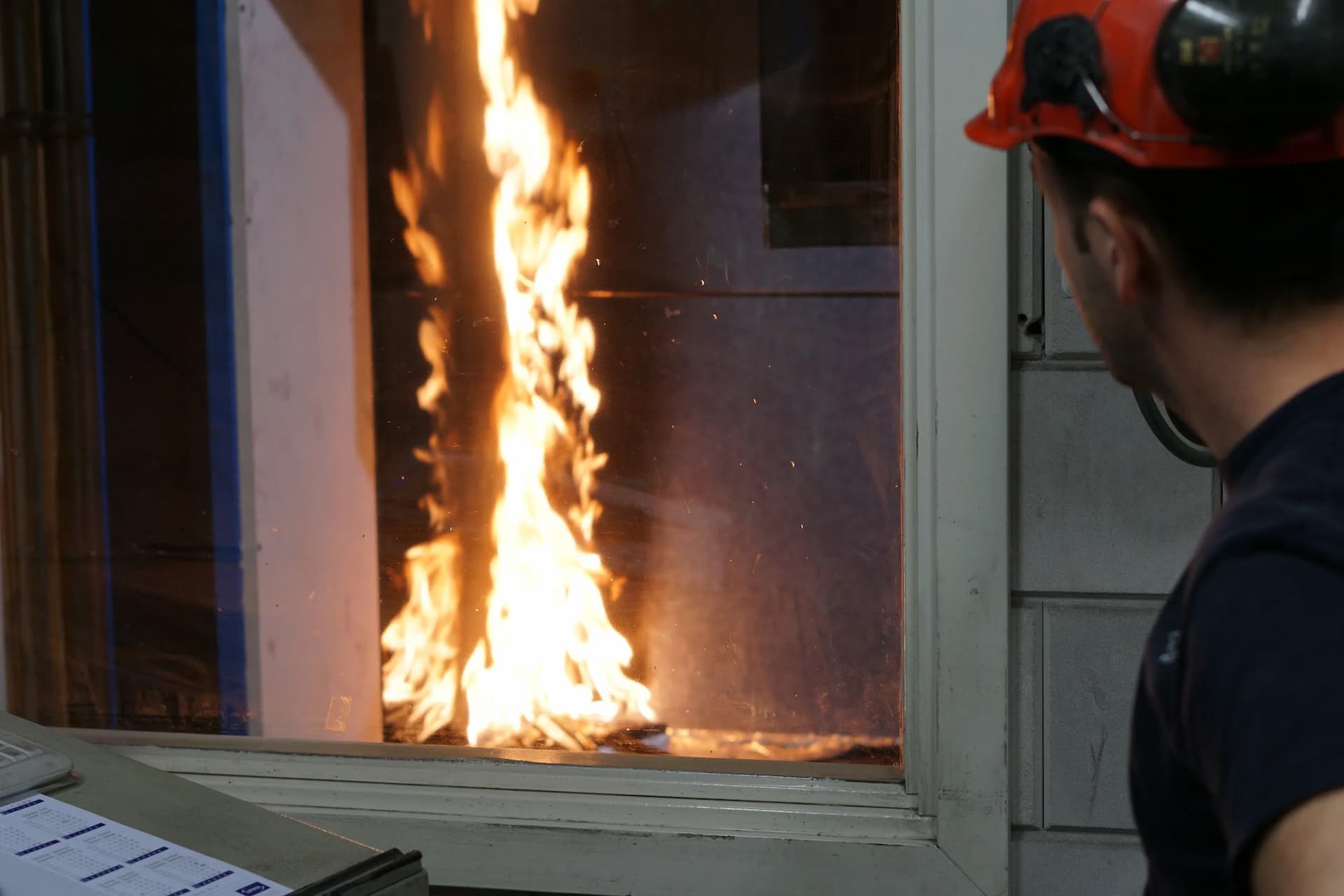
In addition to EN 13501-1 classification, large-scale system tests are used in specific situations to assess the complete installed facade system. Examples include BS 8414 in the UK, ÖNORM B 3800-5 in Austria, DIN 4102-20 in Germany, and ISO 13785 internationally.
These tests are complex and time-consuming and are generally only carried out when required by regulations, for example for certain building heights, or when specifically requested for a project. For most projects, EN 13501-1 classification is sufficient. Large-scale system testing is the exception rather than the standard approach.
Requirements and test methods for large-scale facade testing vary across Europe and depend on national regulations and the specific application. Outside Europe, different certifications and testing standards apply. It is therefore important to check the local requirements for each project.
Solarix in practice
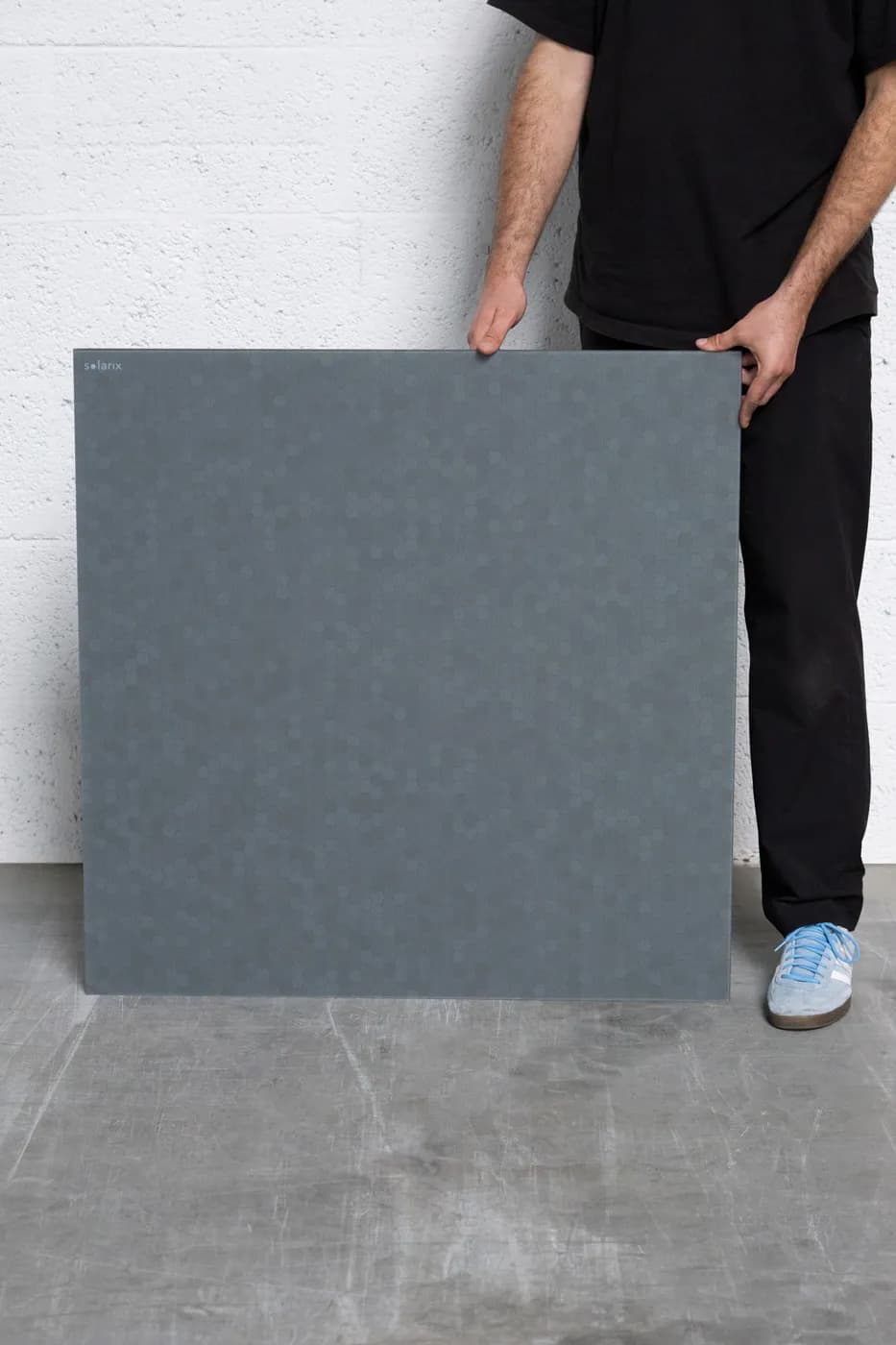
Our glass-glass modules have been tested according to EN 13501-1 and achieve a B-s1,d0 classification.This classification is supported by an extensive range of tests. Over the past few years, Solarix has worked with multiple laboratories to test different colours, glass configurations, and modules both with and without mounting systems. As a result, we can provide a fire classification that matches the specific product configuration used in a project.
In Austria, we also carried out a large-scale system test according to ÖNORM B 3800-5:2024, conducted by an Austrian testing institute. The tested facade system met the requirements of ÖNORM B 3800-5:2024.
Case Study: implementing rapid shutdown technology